
Let’s be real: once you have a baby, you’ll talk about poop more than you ever thought possible. Color, texture, frequency, smell—you’ll analyze it like a crime scene. But baby poop is actually a great window into your little one’s health.
Here’s the no-fluff guide to what’s normal, what’s not, and how your baby’s digestive system evolves—broken down by age, because poop drama definitely comes in phases.
0–2 Months: The Meconium to Mustard Phase
In the first days, your newborn will pass meconium—a black, sticky, tar-like poop made of everything they ingested in the womb. It’s totally normal and should clear within 48–72 hours.
Once your milk comes in (or formula feeding begins), poop starts changing:
- Breastfed babies: Yellow, seedy, mustard-like poop. Frequent (sometimes after every feed), loose, and often explosive.
- Formula-fed babies: Thicker, tan or brown stools. A little smellier, and less frequent (1–2 times/day is common).
What’s normal:
— Grunting, straining, and gas (their digestive system is still maturing)
— Pooping 5x a day… or once every 3 days (if soft and baby’s happy, it’s fine)
Common issues:
Gas: Happens often. Try bicycle legs, tummy massage, or keeping baby upright after feeds.
Reflux: Frequent spit-up, arching, and discomfort. Smaller feeds, frequent burping, or speaking to your doctor can help.
Cow’s milk protein allergy (CMPA): Mucus or blood in stool, rashes, fussiness. Requires diagnosis—don’t self-eliminate dairy unless advised.
2–4 Months: Digestive Drama Begins
The gut is still maturing, but now poop may slow down. Especially for breastfed babies, it’s common to go a few days without a bowel movement.
What’s normal:
— Yellow/brownish poop
— Lots of gas (again), but less straining
— Blowouts—oh yes, still happening
Watch out for:
— Green frothy poop: Could mean too much foremilk, not enough hindmilk. Try longer feeds on one side.
— Constipation (rare in EBF): Hard, pellet-like poop or crying during stool may need attention.
— Stomach viruses: Sudden watery poops, fever, or vomiting—call your doctor if it lasts more than 24 hours or baby seems dehydrated.
4–6 Months: Pre-Solid Wobbles
Still milk-fed, but your baby’s digestive system is getting ready for solids.
Poop report:
— Still soft, a bit smellier
— Might go days without a poop—normal as long as baby’s eating and peeing well
— More drool can lead to looser poops (teething doesn’t cause diarrhea but can change texture)
Digestive hiccups:
— Silent reflux may become more noticeable—frequent swallowing, fussing at feeds
— Gas with screaming fits could indicate colic, lactose overload, or early food sensitivity (always get it checked)
6+ Months: Solids Enter, Chaos Ensues
Ah, the real fun begins. Once solids start, expect everything to change—smell, color, texture.
Totally normal poop variations:
— Orange, green, even blue (yes, blueberries are wild)
— Small undigested chunks—bodies are learning
— Stink levels go from “aww, cute” to “what died?”
Watch for:
— Constipation: Straining, hard pebbles, and dry poop. Try prunes, pears, more water with meals.
— Diarrhea: Frequent, watery stools—watch hydration closely.
— Allergic reactions: Blood in stool, skin rashes, hives—stop the new food and contact your pediatrician.
When to Worry at Any Age:
- Blood in poop (bright red or black)
- Mucus with fussiness or rash
- No poop in >5 days with hard belly
- Baby refusing feeds or showing signs of pain
- Vomiting with diarrhea or fever
- Dehydration (fewer wet diapers, sunken fontanelle, dry lips)
If poop or behavior seems off, trust your gut and call your doctor.
Final Thoughts
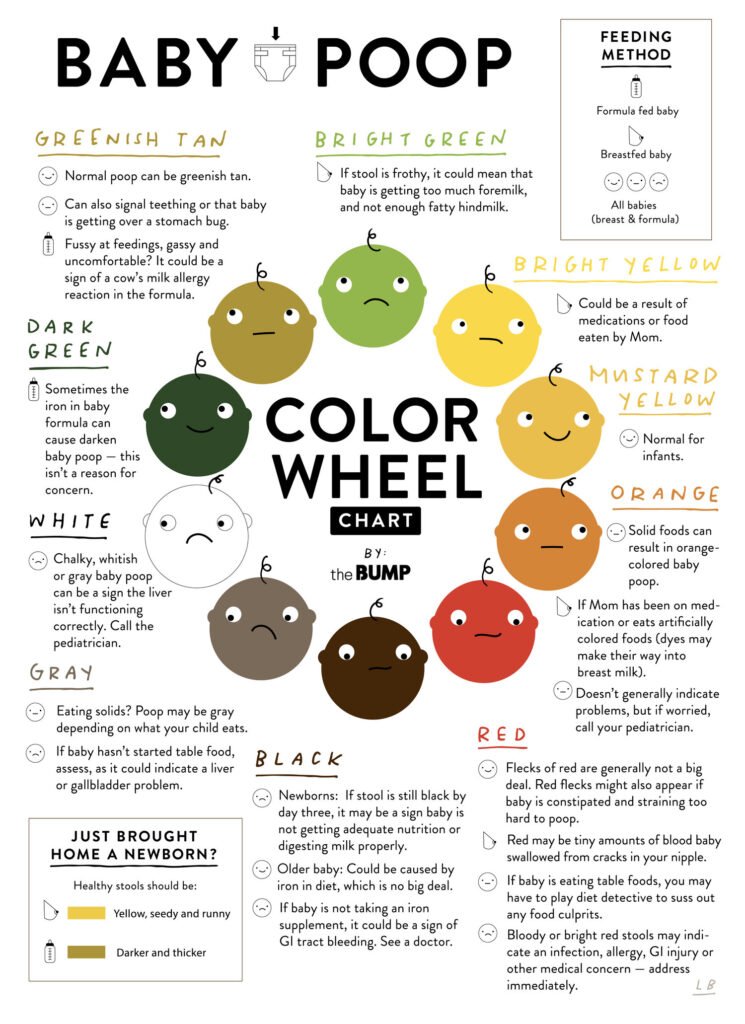
Poop is messy, weird, and sometimes concerning—but it’s also one of the best ways to understand what’s happening in your baby’s tiny body. Every baby’s digestive system develops on its own timeline, and some stomach drama is just part of the ride. For anxiety ridden mamas (like me) you can know exactly what color corresponds to what in baby poop language in this infographic.
This phase? It’ll pass. Literally. But again, somach troubles can creep in from both bottle and breast—yep, even if you’re doing everything ‘right.’ We’ll break down how that happens (and how to help) in the next article.